Region decision
Florida by region: the Atlantic coast vs the Gulf coast vs the Keys
Choose the Gulf for beach towns and island nature, the Atlantic for a mix of beaches, cities and history, or the Keys for a dedicated southbound road trip. Set one base and check current weather and beach conditions before the day’s outings.
Plan the next stepBy Florida Guide editorsReviewed against primary and official sourcesHow we review 14 checked placeschecked September 12, 2026
Positioning
Use this guide when
Best for- First-timers overwhelmed by Florida's size who need to choose one region.
- Travelers deciding between Atlantic surf and cities and calmer Gulf beaches.
- Planners weighing whether Key West and the Everglades justify their drives.
Tradeoffs- The Atlantic coast trades calm water for surf, city energy, and the state's deepest history.
- The Gulf coast trades big-city life for calmer, warmer water, sunsets, and quieter beach towns.
- The Keys and the Everglades are strong payoffs but each is a distinct drive, so add at most one to a coast trip.
- Quick answer: Fort Lauderdale and Miami sit on the Atlantic coast; Tampa, Sarasota, and Naples are on the Gulf; the Keys hang off the southern tip between the two.
Decide by the water and the season, then keep the driving short. If you want warm, calm, shallow Gulf water and sunsets, base on the Gulf around Naples, Sarasota, or Sanibel and treat the shell beaches and gardens as the trip. If you want surf, cities, and history, base on the Atlantic around St. Augustine in the north or the Palm Beach–to–Fort Lauderdale strip in the south. The Keys are a separate southbound leg to Key West, and the Everglades is a nature day you can reach from the Miami side (Shark Valley) or the Gulf side. Whatever you pick, go in the November-to-April dry season if you can, and if you travel in summer, plan mornings outdoors and expect an afternoon storm.
Editorial read
Florida is a region choice, not a loop
The first mistake is trying to see the whole state; the fix is picking one region and basing there.
- The Atlantic and Gulf coasts are a long cross-state drive apart, and Key West is about 160 miles south of Miami on one road, so a statewide loop is mostly driving.
- Pick one region — Atlantic, Gulf, or the Keys — set a base you keep for most nights, and add at most one distinct leg.
- Use short drives within a region rather than long transfers between very different parts of the state.
CalibrationKeep the framing on choosing one region so readers do not plan an exhausting statewide loop.
Editorial read
The water decides the coast
Calm, warm Gulf water or Atlantic surf is the clearest way to choose a side.
- The Gulf coast — Sarasota, Naples, Sanibel — has calmer, warmer, shallower water, shelling, and sunsets, and is easiest with young kids.
- The Atlantic coast has surf, walkable cities, and Florida's deepest history, from St. Augustine's old town to Gilded-Age Palm Beach.
- Tampa and Ybor City add a Gulf-side city option, with the Columbia Restaurant, Florida's oldest, as the anchor.
- The Gulf-versus-Atlantic comparison describes typical conditions, not a swimming guarantee. Check the local beach flags and forecast on either coast; rip currents can affect both.
CalibrationKeep the Gulf-versus-Atlantic split framed by water and pace, not by one coast being better.
Editorial read
The Keys and the Everglades are their own legs
Both are worth it, but each is a distinct drive, not a casual day trip.
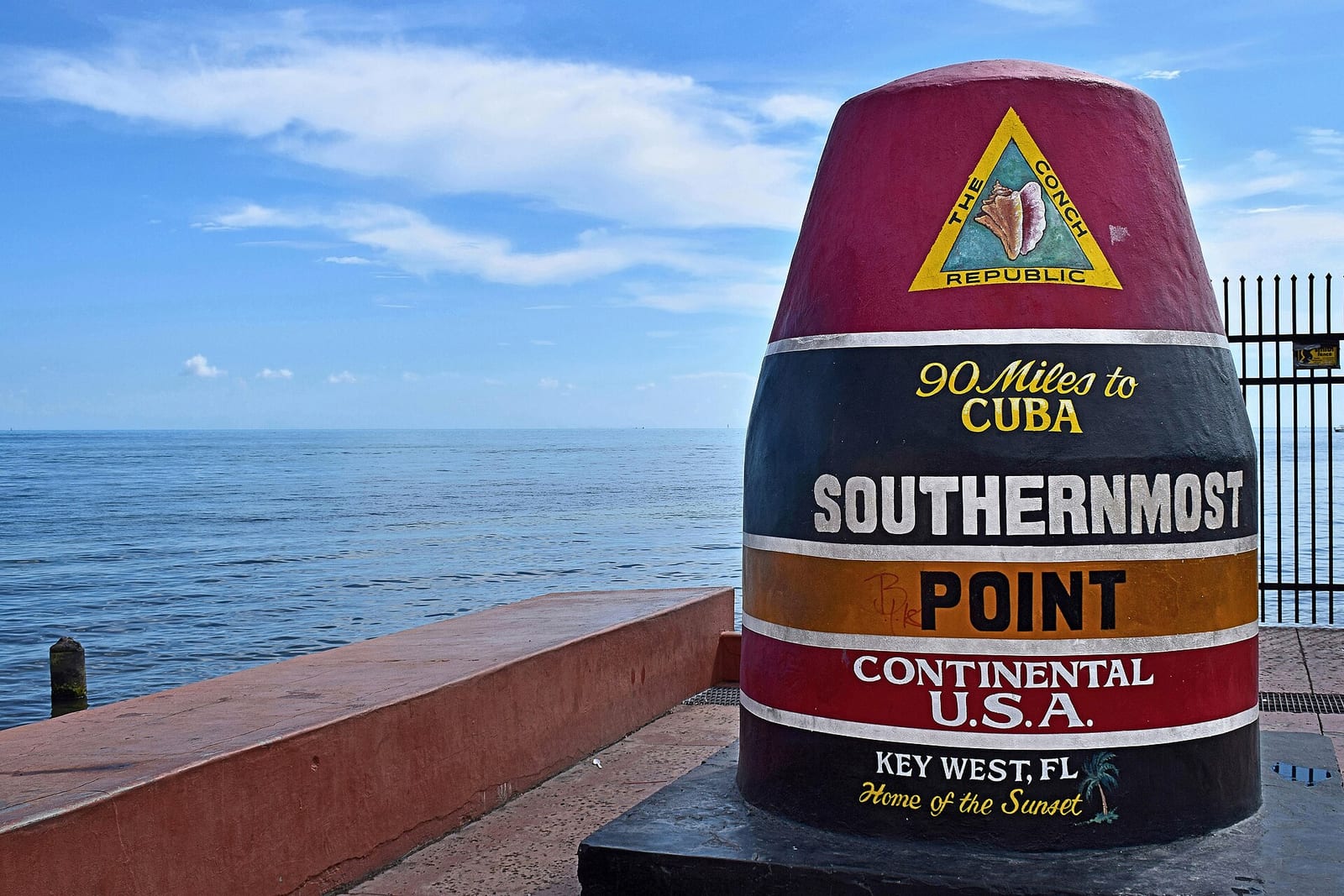
- Key West is about 160 miles and a full day south of Miami on the Overseas Highway; treat it as a dedicated leg and stay a night or two.
- The Everglades is a nature day best in the December-to-April dry season; reach Shark Valley from the Miami side or the Marjory Stoneman Douglas Visitor Center (Gulf Coast) from the west.
- With under a week on a single coast, skip both add-ons rather than spending the trip driving.
- The Marjory Stoneman Douglas Visitor Center is open 9am–5pm. Confirm the boat operator’s meeting point and return transport separately; the NPS page describes a tour departure away from the visitor center. Park admission does not include concessioner tours.
CalibrationKeep the Keys and Everglades framed as distinct legs so readers do not underestimate the drives.